
Texas border districts filed nearly four civil immigration cases for every criminal one in early 2026

Artem Kolisnichenko
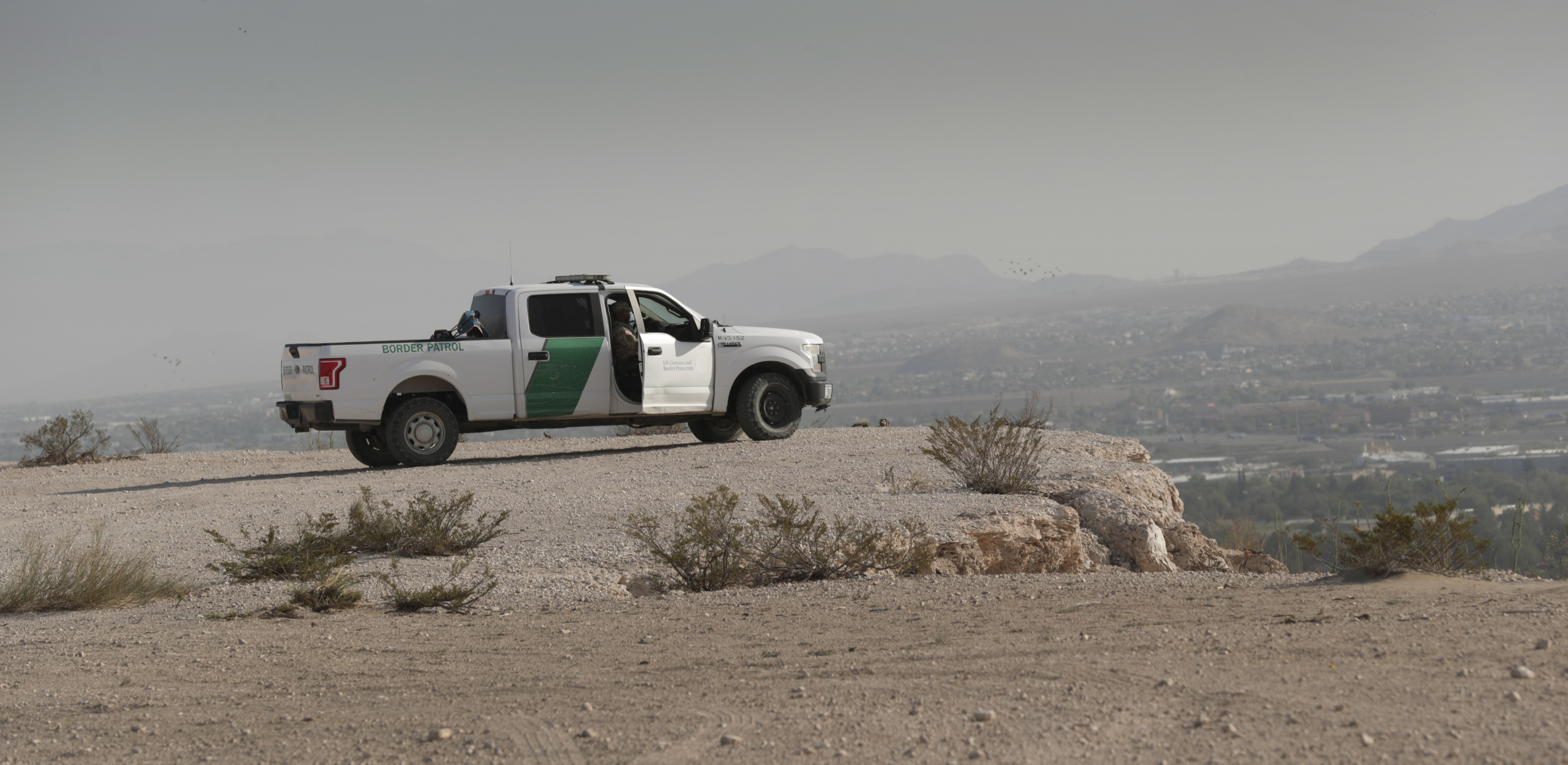
Federal authorities filed 11,585 civil removal charges for unlawful presence in immigration courts across the Southern and Western Districts of Texas between January and March 2026. Over the same three months they brought 3,167 criminal illegal-reentry prosecutions in the same two districts. That comes to 3.66 civil cases for every criminal one. Both rest on unlawful presence in the country, though the criminal charge reaches only people who returned after a prior removal, according to processed court records released through the Deportation Data Project and the federal criminal dockets for those districts.
The window sits inside a new legal regime. Texas Senate Bill 8, passed by the 89th Legislature in 2025, took effect January 1, 2026. The law requires the sheriff of every Texas county above 100,000 residents to sign a 287(g) agreement with ICE under ICE's 287(g) program, and it sets a compliance deadline of December 1, 2026. When the bill was introduced in early 2025, roughly 35 Texas counties held such an agreement. Sign-ups then surged statewide through 2025. The roster used in this analysis lists 395 agreements across 211 counties, with 259 already active before January 1, 2026. Counties signed 120 new agreements during the January-to-April window and 16 more in May.
The civil channel runs through INA section 212(a)(6)(A)(i), the charge for entering or remaining in the country without admission. Immigration court recorded 11,585 of these charges across the Southern and Western Districts of Texas from January through March 2026. The Southern District of Texas accounted for 8,007. The Western District of Texas accounted for 3,578. The criminal channel runs through 8 U.S.C. §1326, which makes illegal reentry a federal felony. Prosecutors filed 3,167 of these cases over the same months, with 1,927 in the Southern District and 1,240 in the Western District. In both border districts the civil docket dwarfs the criminal one. The civil-to-criminal ratio reaches 4.16 to 1 in the Southern District and 2.89 to 1 in the Western District. The two counts describe overlapping but not identical populations: the criminal charge applies only to people who reentered after a prior removal, while the civil charge covers anyone present without admission. The files share no identifier that links a person across them, so the ratio compares the scale of the two enforcement tracks and does not mean any individual was charged twice. The fully covered months show each stream at scale. ICE arrests ran above new court cases in January and February, while §1326 prosecutions stayed well below both. ICE logged 18,409 administrative arrests across Texas through the March 10 coverage cutoff, the full universe across all methods.
The first quarter offered a way to test whether local 287(g) policing changed who lands in immigration court. If county deputies enforcing immigration law produced more home-county notices to appear rather than transfers to distant detention, counties with an agreement should show a higher never-detained share of their EOIR caseload, meaning the portion of cases in which ICE never held the person in detention. The analysis compared the two groups and held to counties where detention runs below 80 percent, so the large facility counties do not distort the result. Facility counties, where detention runs above 90 percent, fall outside the comparison for that reason. By the unweighted county average, the 150 counties with a 287(g) agreement showed a never-detained share of 95.8 percent, against 94.3 percent for the 19 counties without one. That 1.5-point edge runs in the direction the hypothesis predicted, but it is small. Weighting by caseload reverses it: pooled across all cases, the agreement counties sat at 84.2 percent and the counties without one at 85.8 percent, a 1.6-point gap the other way. The two measures point in opposite directions and neither gap is large, so the data shows no detectable shift in local case composition across the first four months of the new regime.
The cross-dataset view confirms a pattern the EOIR file alone suggested, as previously reported by Texas Border Examiner. Eight rural counties absorbed 4,938 of the 31,161 Texas removal cases opened from January through April 2026, or 15.8 percent. Each ran between 93.6 and 100 percent detained. Seven of the eight counties host publicly listed ICE detention facilities; The resolvable arrest counts point back toward the metros. Dallas carries 2,934 arrests that resolve to a county and sits in the Northern District, which holds three of the eight facility counties (Concho, Jones, and Johnson). Harris carries 306 and shares a district with the two Southern District facility counties (Willacy and Walker). For the two Western District facilities, the leading resolvable counties are Val Verde, Midland, and Ector. Each of those three resolves more arrests than either Western District facility county. Picture by CBP Photography
Our contacts:
contact@texasborderexaminer.com
editor@texasborderexaminer.com
© 2026 TEXAS BORDER EXAMINER
