
Most decided Texas immigration cases this year ended in an order to leave the country

Artem Kolisnichenko
The federal immigration courts opened 31,167 removal cases in Texas from January through April 2026, according to processed court records released through the Deportation Data Project. Judges had decided 8,828. The other 22,339, seven in ten, remain open. Of the 8,828 decided cases, judges ordered 4,962 people removed and granted 2,527 voluntary departures. Those two outcomes together account for 84.8% of every closed case. Judges granted relief, the category the data uses for asylum, cancellation of removal, and similar protection, in 40 cases. The remaining decided cases ended in a mix of dismissals, terminations, and procedural closures.
The court data records the immigration court result, not whether a person actually left the country. For people held in detention, a removal order almost always leads to an actual removal. For people who are not detained, it may not. The figures here describe court outcomes, not deportations carried out. One in three of those removal orders came in absentia. Judges entered 1,655 of the 4,962 removal orders, 33.4%, against people who did not appear at their hearing. Of all 1,662 in absentia cases in the file, 1,655 ended in removal, a rate of 99.6%. Mexican and Venezuelan nationals made up the two largest groups in the caseload. Close to half of all the people in these cases applied for asylum, but the rate split sharply by nationality. Venezuelans applied at more than three times the rate of Mexicans. Most of those applications sit in the pending majority and have not reached a decision. New case volume climbed through the period. Courts received 6,359 notices to appear in January, 5,951 in February, 9,729 in March, and 9,122 in April. March ran 53.0% above January.
Detention status tracks closely with whether a case has closed. The file lists 19,981 people as never detained, 10,588 as detained throughout their proceedings, and 597 as released. By the time of the data pull, judges had decided most of the detained cases but only about one never-detained case in nine. A detained case reached a decision in a median of 21 days from the notice to appear. A never-detained case took 35 days, and the 597 released cases took 60.5 days.
Those medians cover decided cases only. Cases that run to a full hearing on the merits take longer and sit mostly among the 22,339 open cases, so the medians describe the cases that closed fastest, not how long a contested case runs. The records list a Texas county for every case, but for detained people that county marks a detention facility, not a home. In a handful of rural counties nearly every case is a detained one. Concho County shows no other kind, and the Frio County caseload, the largest of the group at 1,200 cases, runs over 99% detained. The population centers show the opposite pattern. In Harris County, the largest in the state at 6,786 cases, fewer than one case in 16 involves someone in detention. There the county marks where people live. In the rural detention counties it marks the facility that holds them.
Most people in these cases had no lawyer. An attorney had entered an appearance in 6,361 of the 31,167 cases, 20.4%. The outcomes split with it. People with a lawyer were ordered removed less often than they were granted voluntary departure. People without one were ordered removed most of the time, and relief went almost entirely to the represented, 39 of the 40 grants. This is a correlation. Represented and unrepresented respondents differ in ways the data does not capture, including the strength of their claims, so these figures do not establish that a lawyer changes the outcome on their own.
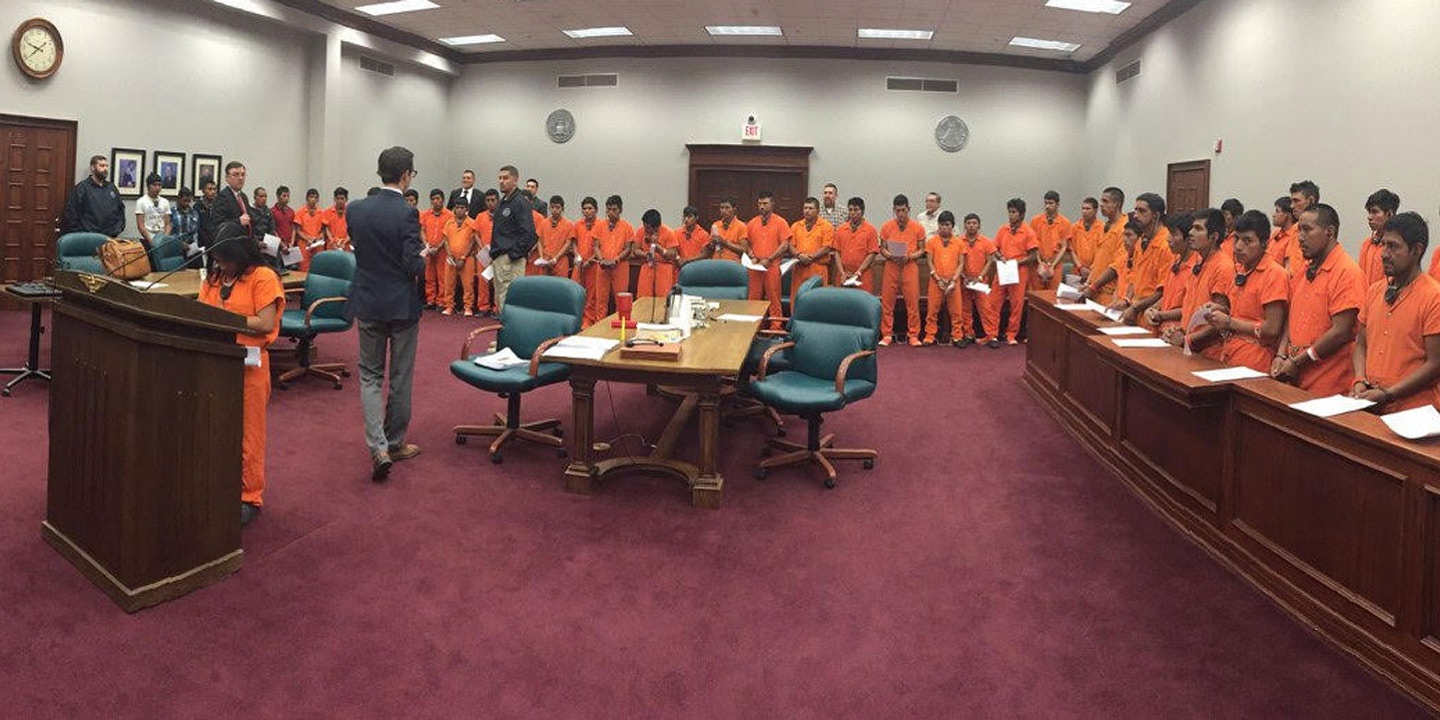
Three civil grounds account for 96.0% of the lead charges. The government charged 22,472 people, 72.1%, under INA section 212(a)(6)(A)(i), for being present in the country without admission or parole. It charged 5,076, 16.3%, under section 237(a)(1)(B), which applies to people who were admitted and then fell out of lawful status. It charged 2,372, 7.6%, under section 212(a)(7)(A)(i)(I), for lacking a valid immigrant visa or entry document. These are civil grounds for removal. They are not criminal convictions, and the court data does not record criminal history. Photo: Federal Courthouse, Pecos, TX
Our contacts:
contact@texasborderexaminer.com
editor@texasborderexaminer.com
© 2026 TEXAS BORDER EXAMINER
