
WDTX Sentenced More People Than Any Court in America Last Quarter

Artem Kolisnichenko
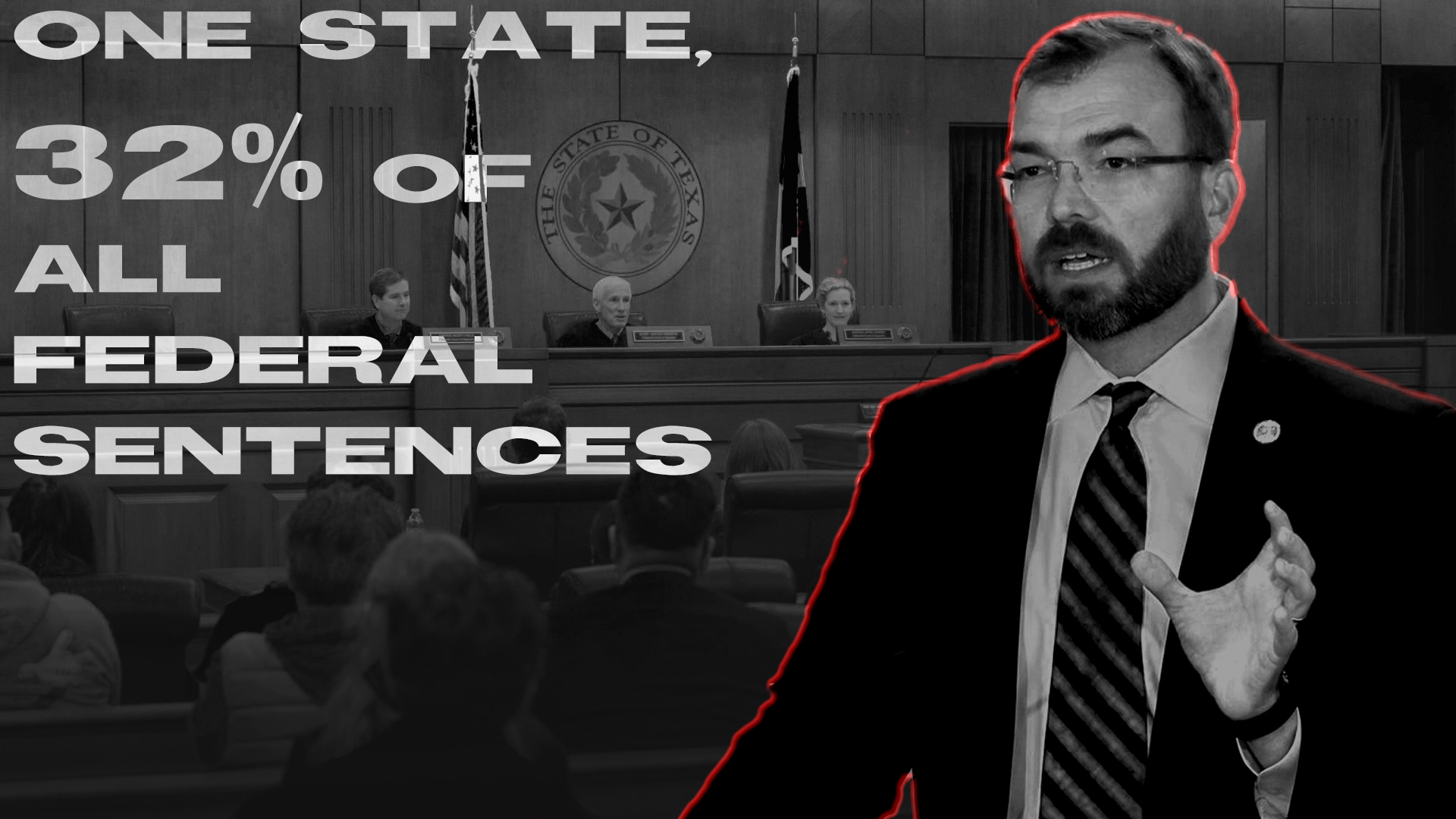
The U.S. Sentencing Commission released its first batch of fiscal year 2026 data on May 8, covering every person a federal court sentenced between October 1 and December 31, 2025. Federal judges sentenced 16,341 people nationwide during those three months. Texas courts handled 5,235 of them, just under a third of the national total, across four judicial districts. The Western District of Texas sentenced 2,715 people, the highest total of any federal district in the country. The Southern District of Texas was second with 1,926. The next-busiest district was New Mexico at 956, followed by Arizona at 934.
A New Rule Arrives Mid-Quarter
On November 1, 2025, one month into the quarter, Amendment 836 took effect and changed how federal courts record the Early Disposition Program. EDPs are fast-track deals in which a defendant agrees to plead quickly, give up certain appeals, and accept the facts as charged in exchange for a shorter sentence. U.S. Attorneys along the southwest border have run these programs for years to move large volumes of immigration cases. Before the amendment, the fast-track reduction appeared in the data as a "departure." It now has its own category. The Commission records these cases four ways: a within-range sentence with the EDP credit, a below-range sentence with the EDP credit, an above-range sentence with the EDP credit, and the EDP credit combined with a cooperation deal. Federal courts applied the EDP credit in 1,107 cases during the quarter, or 6.8 percent of all federal sentences. (Table 8)
The Western District's Zero
In most border districts, the EDP credit produces a sentence below the guideline range. Arizona courts did this 170 times last quarter, Southern California 147 times, New Mexico 56 times, and the Southern District of Texas 28 times. The Western District of Texas did it zero times, out of 2,693 cases where the Commission could compare the sentence to the guideline range. No other district handling more than a thousand cases reported a zero. (Table 9) The Western District still applied the EDP credit, but only in cases that stayed within the guideline range. It did not use the credit to push any sentence below that range. Operation Streamline, the model for assembly-line border prosecution, began in the district's Del Rio sector in December 2005.
Sentencing Trends
The Western District also sentenced above the guideline range more often than almost any other court. Federal courts nationwide sentenced 684 people above the range last quarter, about 4 percent of all cases. The Western District accounted for 294 of them, nearly 11 percent of its caseload and more than two and a half times the national rate. Arizona sentenced less than 1 percent of its cases above the range, and Southern California did the same. Texas courts also kept sentences inside the guideline range more often than the rest of the country. Nationally, 59 percent of sentences fell within the range. The figure was 80 percent in the Western District, 78 percent in the Southern District, 70 percent in the Northern District, and 63 percent in the Eastern District.
What Filled the Docket
Immigration cases made up 6,634 of the 16,341 sentencings nationwide, or 41 percent, the largest category of federal crime last quarter. Drug trafficking followed at 22 percent and firearms at 12 percent. Nine in ten immigration cases involved someone who was not a U.S. citizen. The most common charge was illegal reentry, with 5,079 sentences nationwide, followed by alien smuggling with 667. Half of immigration sentences were four months or less.
The Commission will publish second-quarter figures in August and the final FY26 data, with a full district-by-crime breakdown, in 2027. You can find the methodology and a detailed analysis of the data in Data section. The illustration for the article was prepared by @cute_сhaika
Our contacts:
contact@texasborderexaminer.com
editor@texasborderexaminer.com
© 2026 TEXAS BORDER EXAMINER
