
Texas SB 4: Judge Blocks Four Provisions, §51.02 Takes Effect

Artem Kolisnichenko
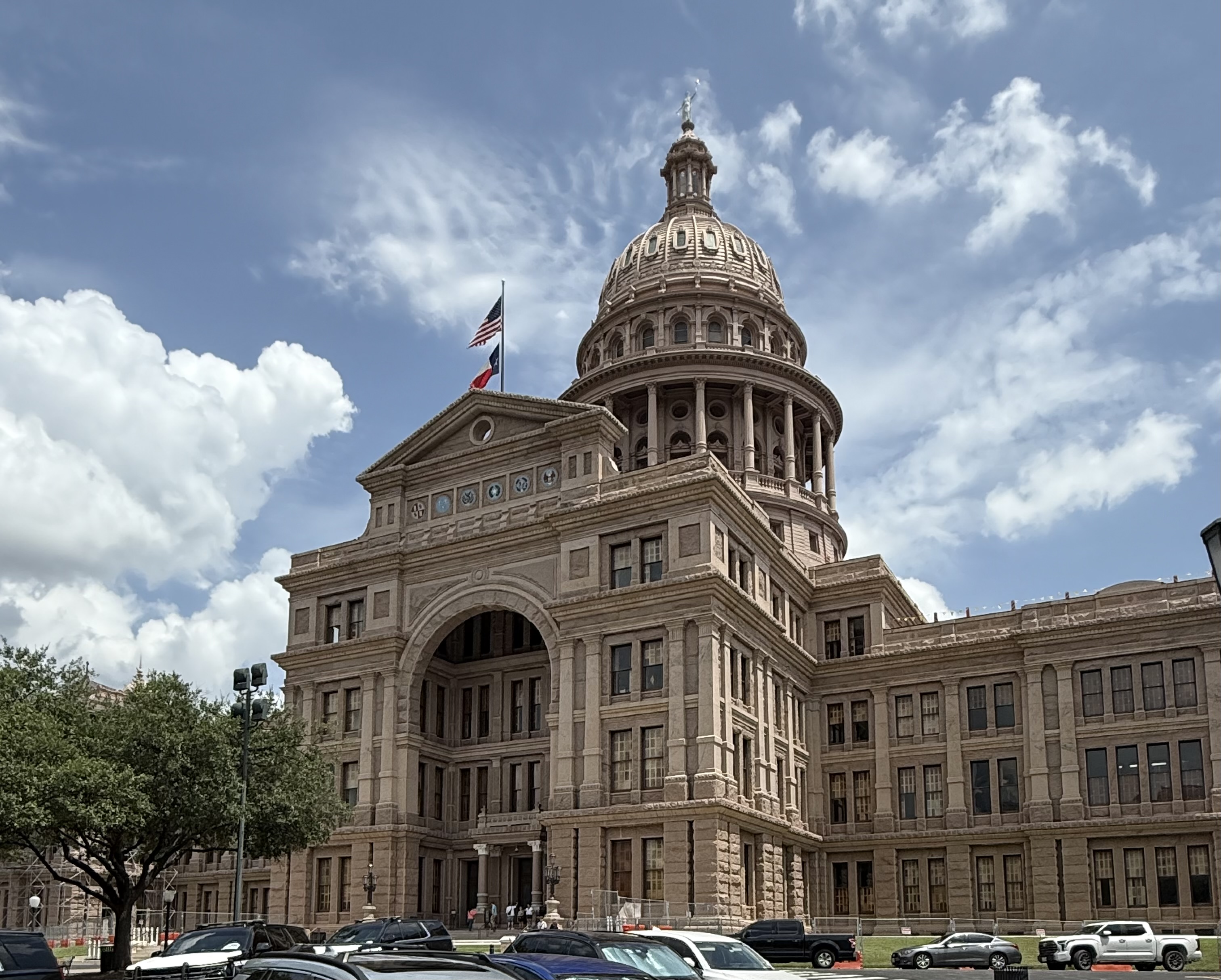
On May 14, 2026, U.S. District Judge David Alan Ezra issued a 78-page preliminary injunction blocking key provisions of Texas Senate Bill 4 one day before the law's effective date. The order leaves the illegal entry crime in Texas Penal Code §51.02 in force as of May 15.
What the Order Blocked
The ruling in LML v. Martin halts four mechanisms: Texas Penal Code §51.03, the illegal reentry crime, which would have applied to any noncitizen who reentered the United States after a prior removal, including persons who now hold a green card or other lawful status. The authority of state magistrates to issue removal orders under Article 5B.002 of the Texas Code of Criminal Procedure. Texas Penal Code §51.04, which made refusal to comply with a magistrate's removal order a second-degree felony punishable by up to 20 years. The requirement that state magistrates continue a prosecution even when a defendant has a pending immigration case under federal law.
What Took Effect
§51.02 remains in force. The statute makes it a Class B misdemeanor for a noncitizen to enter or attempt to enter Texas directly from a foreign nation at any location other than a lawful port of entry. A first conviction carries up to 180 days in jail and a fine of up to $2,000. A spokesperson for Governor Greg Abbott said on May 13 that "Texas will not publicly reveal operational details to the cartels attempting to smuggle illegal immigrants, drugs, and weapons into our country, but it is fully prepared to enforce the law." The Texas Department of Public Safety has not published charging guidance or coordination protocols with county magistrates.
How the Case Got Here
On May 4, 2026, the ACLU, ACLU of Texas, and Texas Civil Rights Project filed LML v. Martin as a class action in the U.S. District Court for the Western District of Texas. Two anonymous Honduran nationals living in Austin lead the class action. One holds a lawful permanent resident card. The other has provisional approval for a U visa as a crime victim. Both entered the United States without inspection. The sole named defendant is Freeman Martin, Director of the Texas Department of Public Safety. The new lawsuit followed an April 24, 2026 en banc ruling by the 5th U.S. Circuit Court of Appeals, which vacated Ezra's prior injunction on standing grounds in a 10-7 decision, ruling that Las Americas Immigrant Advocacy Center, American Gateways, and El Paso County lacked standing to challenge SB 4. The Fifth Circuit's mandate issued May 15, 2026, lifting Ezra's February 29, 2024 injunction and allowing the law to take effect. On May 13, 2026, Ezra heard oral argument. State counsel David Bryant of the Attorney General's office argued that the case should be dismissed because SB 4 had not yet taken effect and DPS Director Martin had not specified enforcement procedures. From the bench, Ezra said "it just doesn't make any sense to me unless one ignores the Constitution," and added, "The state of Texas is not its own country."
From the Order
In his 78-page ruling, Ezra wrote that "at the broadest level, SB 4 conflicts with federal immigration law because it provides state officials the power to enforce federal law without federal supervision," and that "Congress has enacted a statutory scheme to ensure that federal immigration law is conducted under the watch of federal officials in a uniform way across all fifty states, and SB 4 interferes with that goal." Ezra added that "it is implausible to imagine each of the fifty United States having their own state immigration policy superseding the powers inherent in the United States as a Nation."
§51.02 is enforceable as of May 15, 2026. Four of the five enforcement mechanisms the 88th Legislature wrote into SB 4 during its fourth special session remain blocked. Without §51.03, the magistrate removal scheme under Article 5B.002, and the §51.04 felony refusal charge, a §51.02 arrest must proceed through ordinary state criminal prosecution. The §51.02(e) peace-officer removal authority remains in force, allowing officers to transport a person to a port of entry and order return to a foreign nation in lieu of arrest. Without the §51.04 felony backstop for refusal, however, the practical mechanism for compelled return-to-Mexico is significantly weakened.
Photo credit:By Farragutful - Own work, CC BY-SA 4.0
Our contacts:
contact@texasborderexaminer.com
editor@texasborderexaminer.com
© 2026 TEXAS BORDER EXAMINER
